Wondering whether Duck fits the way you actually want to live or own on the Outer Banks? That question matters here because Duck has a very specific feel: walkable, village-centered, and scenic, but not built around public beach parking or big-box convenience. If you are thinking about a full-time move, a second home, or a part-time rental, this guide will help you understand what daily life and ownership in Duck really look like. Let’s dive in.
Duck’s overall feel
Duck is Dare County’s northernmost community and the Outer Banks’ newest town, incorporated in 2002. The town describes itself as a sound-to-sea place, with Duck Village and the Town Park and Boardwalk at the center of local identity.
If you picture a classic beach strip with heavy commercial activity, Duck is not that. Its identity leans more toward a compact coastal village with independent businesses, natural surroundings, and a day-to-day rhythm built around walking, biking, and spending time near the water.
Why buyers are drawn to Duck
A big part of Duck’s appeal is how easy it is to enjoy the town without constantly getting back in the car. The Town Park includes 11 acres of maritime forest and willow swamp trails, sound views, a playground, a gazebo, a public kayak and canoe launch, and transient-use boat piers.
The Soundside Boardwalk stretches nearly a mile along Currituck Sound. That gives you a practical and enjoyable way to move between shops, restaurants, and waterfront spots while staying connected to the heart of town.
Duck also puts real emphasis on pedestrian access. The Duck Trail is a six-mile multi-use path, and the village commercial area includes sidewalks and designated bike lanes on both sides of Duck Road.
For many buyers, that combination creates one of Duck’s biggest advantages: a coastal setting that feels more connected and walkable than many beach towns. If you value being able to stroll to dinner, bike through town, or spend time on the boardwalk, Duck stands out.
What daily life in Duck looks like
Duck works best if you like a village setting and do not need every errand handled inside town limits. You can cover a lot of your day in town, especially if your routine includes local dining, walking, biking, and enjoying the soundside public spaces.
At the same time, larger grocery trips often mean heading to Kitty Hawk or Kill Devil Hills, where stores are bigger and selection is wider. That does not make Duck inconvenient, but it does mean you should expect a nearby-town errand pattern rather than an all-in-one retail setup.
For some buyers, that tradeoff feels worth it because Duck is more compact and less commercially intense. For others, especially buyers who want more everyday convenience close by, that may be a drawback.
Beach access in Duck is different
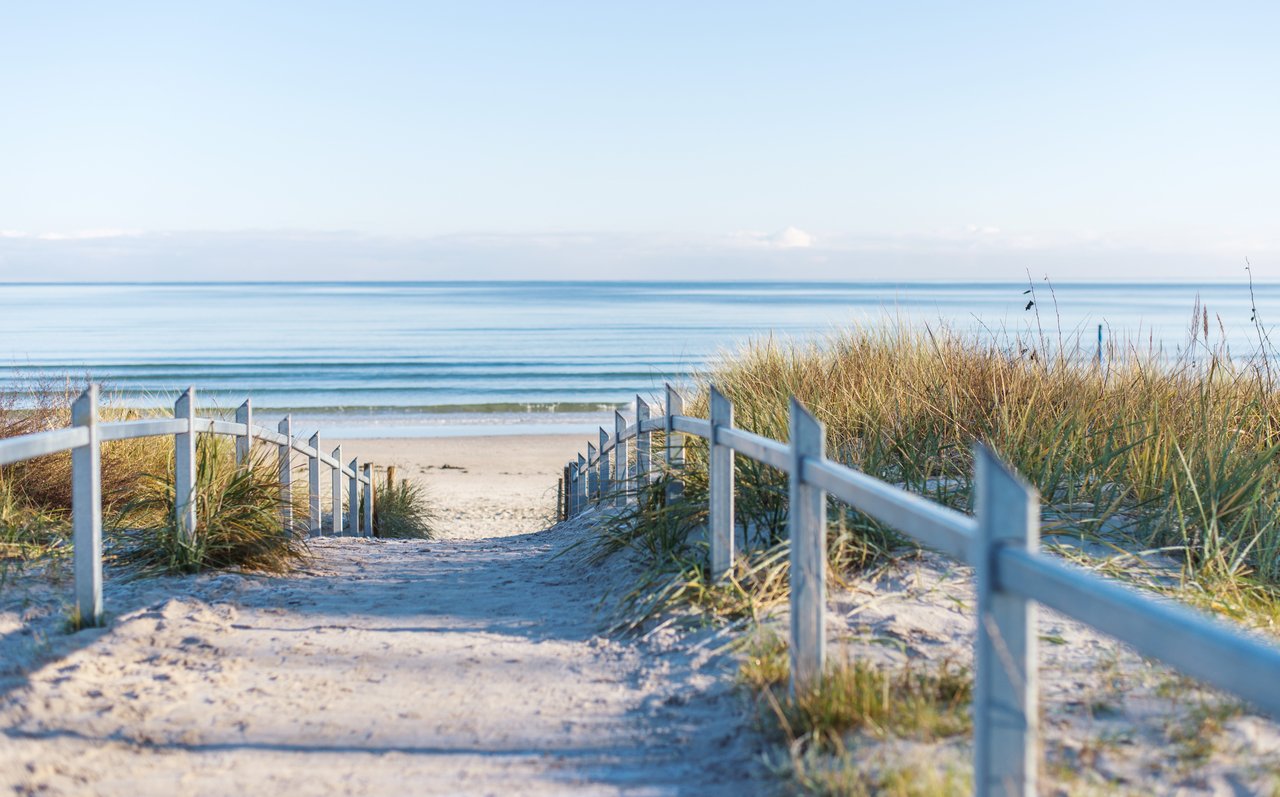
This is one of the most important things to understand before you buy. The Town of Duck does not own or maintain public beach access locations, and there is no public parking at beach accesses inside town.
Beach access is limited to residents, Duck renters, and their guests through privately owned and maintained access points. In practical terms, that means your experience can depend heavily on the property you choose, the neighborhood setup, and any instructions tied to access use.
Duck also prohibits beach driving from March 16 through November 30, and there are no public vehicle access points inside town limits. If public beach parking and easy public access are high on your priority list, Duck may feel restrictive compared with other Outer Banks towns.
Sound access is useful, but limited
Duck does offer public sound access, but it is important to know what that actually means. The town has three public sound access points: the kayak and canoe launch at the Town Park and two day-use boat piers at the north and south ends of the boardwalk.
Those piers are for temporary mooring, not for launching motorized watercraft. The town also states that it has no public soundside beach and no public motorized launch points within town limits.
If you want easy kayak or canoe access and a strong soundside lifestyle, Duck can work very well. If you need a motorized boat ramp in town, you will need to look to nearby areas such as Kitty Hawk or Corolla.
Housing in Duck tends to center on detached homes
Duck’s zoning points to a housing pattern built mostly around low-density residential living. The town includes RS-1 and RS-2 single-family residential districts, along with R-2 medium-density residential and a village commercial district.
RS-1 and RS-2 are intended for low-density single-family detached dwellings. R-2 is intended for moderate-density residential neighborhoods with a mix of permanent and short-term seasonal residents.
Accessory dwelling units are allowed in RS-1, RS-2, and R-2 on properties with a single-family detached residence. The village commercial district also allows some added flexibility, including accessory apartments above or attached to commercial buildings, as well as bed-and-breakfast inns and rental property management offices.
For most buyers, the takeaway is simple: Duck is generally more about detached homes and lower-density neighborhoods than a broad condo-heavy or apartment-heavy setup. That housing pattern supports the town’s quieter village character.
Coastal ownership in Duck comes with extra considerations
In Duck, buying near the water means looking beyond square footage and finishes. Flood exposure, shoreline conditions, access type, and location-specific rules can all shape what ownership feels like over time.
The town’s flood information directs owners to FEMA flood maps, and Duck’s resiliency materials note that five residential neighborhoods experience routine flooding from stormwater runoff. The town also has ongoing shoreline-protection efforts and completed a 2023 beach nourishment project that placed sand along nearly 1.7 miles of beach.
Some water-adjacent parcels may also fall within Duck’s Ocean and Sound Overlay District, which covers waters abutting the town and shoreline areas within 1,000 feet. If you are considering a soundside, oceanside, or other water-adjacent property, you want to evaluate not just the home, but the site and ownership obligations that come with it.
Who Duck is usually a good fit for
Duck tends to be a strong match if you want:
- A pedestrian-first coastal town
- A compact village atmosphere
- Independent shops and restaurants near the center of town
- Easy access to walking, biking, and boardwalk time
- Soundside recreation like kayaking or canoeing
- A detached-home market with a lower-density feel
It can also appeal to second-home buyers who want a recognizable Outer Banks location with a strong lifestyle identity. For part-time rental goals, walkability, proximity to the boardwalk, and access patterns can all play an important role in how a property fits your plans.
Who may want to look elsewhere
Duck may be a weaker fit if you want:
- Public beach parking
- Public beach access that feels more straightforward
- Big-box shopping or larger grocery options inside town
- A more car-oriented town with heavier retail convenience
- A public motorized boat launch within town limits
If those items are high on your list, you may want to compare Duck with nearby towns before making a decision. Sometimes the right Outer Banks location comes down to whether you value atmosphere and walkability more than convenience and public access.
How Duck compares with nearby towns
Duck vs. Southern Shores
Southern Shores is generally quieter and more residential, with fewer shops and restaurants and no public beach or sound access. It shares some of Duck’s lower-key feel and includes a mixed-use bike and walking path, but it offers less village-commercial activity.
If you want a more residential environment with fewer commercial elements, Southern Shores may be worth a look. If you want a town center feel with restaurants, shops, and a boardwalk experience, Duck typically offers more of that.
Duck vs. Kitty Hawk
Kitty Hawk is more commercial and convenience-oriented. It has a broader mix of residential and rental homes, hotels and motels, RV-friendly campgrounds, a dozen public beach accesses, larger retail options, and a wider restaurant scene.
If your priority is convenience, public access, and everyday retail options, Kitty Hawk may feel easier. If your priority is a village atmosphere with a more walkable core, Duck often feels more distinctive.
Duck vs. Nags Head
Nags Head is the more amenity-heavy option among the nearby towns in this comparison. It includes beach houses, hotels, boutiques, surf shops, an outlet mall, grocery stores, and public beach access.
For buyers who want a more built-out environment with many practical options close at hand, Nags Head can make sense. For buyers who want a smaller-scale town identity, Duck may feel more aligned.
Duck vs. Corolla
Corolla offers a different experience, especially with its connection to the 4x4 areas north of where NC 12 pavement ends. That gives Corolla a more remote and adventure-oriented comparison point.
Duck, by contrast, is more village-centered and walkable. If you are choosing between the two, think about whether you want a compact town core or a more remote coastal setting.
Questions to ask before buying in Duck
Before you decide, ask yourself a few practical questions:
- Do you want a pedestrian-first village, or do you want more day-to-day convenience inside town limits?
- Are you comfortable with private beach access rather than public beach parking and public beach entry?
- If you plan to use the home part-time, does the property’s access pattern fit how you want to enjoy it?
- If you may rent the property part-time, does the location support the guest experience you have in mind?
- Do you need a motorized boat launch in town, or is kayak and canoe access enough?
- Are you comfortable evaluating flood maps, stormwater patterns, and shoreline-related ownership factors?
These questions matter in Duck because the town’s appeal is very real, but it is also specific. The better your expectations line up with how Duck actually works, the better your ownership experience is likely to be.
The bottom line on Duck
Duck can be an excellent fit if you want a scenic, walkable Outer Banks town with a strong village core, soundside recreation, and a housing pattern centered on detached homes. It is especially appealing if you enjoy the idea of boardwalk strolls, local businesses, and a setting that feels smaller and more connected.
It may be less appealing if you want public beach parking, broader retail convenience, or a more access-heavy, car-oriented layout. In other words, Duck is not trying to be everything. It is best for buyers who want what makes Duck distinctly Duck.
If you are weighing Duck against other Outer Banks towns, having local guidance can help you match your goals to the right location and property type. The team at Brink Team Homes can help you evaluate the tradeoffs, narrow your search, and move forward with confidence.
FAQs
Is Duck, NC a walkable Outer Banks town?
- Yes. Duck has a six-mile multi-use trail, sidewalks and bike lanes in the village commercial area, and a soundside boardwalk that connects shops, restaurants, and waterfront spaces.
Does Duck, NC have public beach access parking?
- No. The Town of Duck does not provide public parking at beach access points, and beach access is limited to residents, Duck renters, and their guests through privately owned and maintained locations.
What kind of homes are most common in Duck, NC?
- Duck’s zoning suggests a market centered mainly on low-density single-family detached homes, with some moderate-density residential areas and limited mixed-use flexibility in the village commercial district.
Is Duck, NC good for kayaking and sound access?
- Duck offers public sound access for kayaking and canoeing through the Town Park launch, plus two day-use boat piers for temporary mooring.
Does Duck, NC have a public boat ramp for motorized watercraft?
- No. Duck does not have public motorized launch points within town limits.
What should buyers watch for when buying a home in Duck, NC?
- Buyers should pay close attention to beach access type, flood mapping, stormwater conditions, shoreline considerations, and how close the property is to the village core and boardwalk.